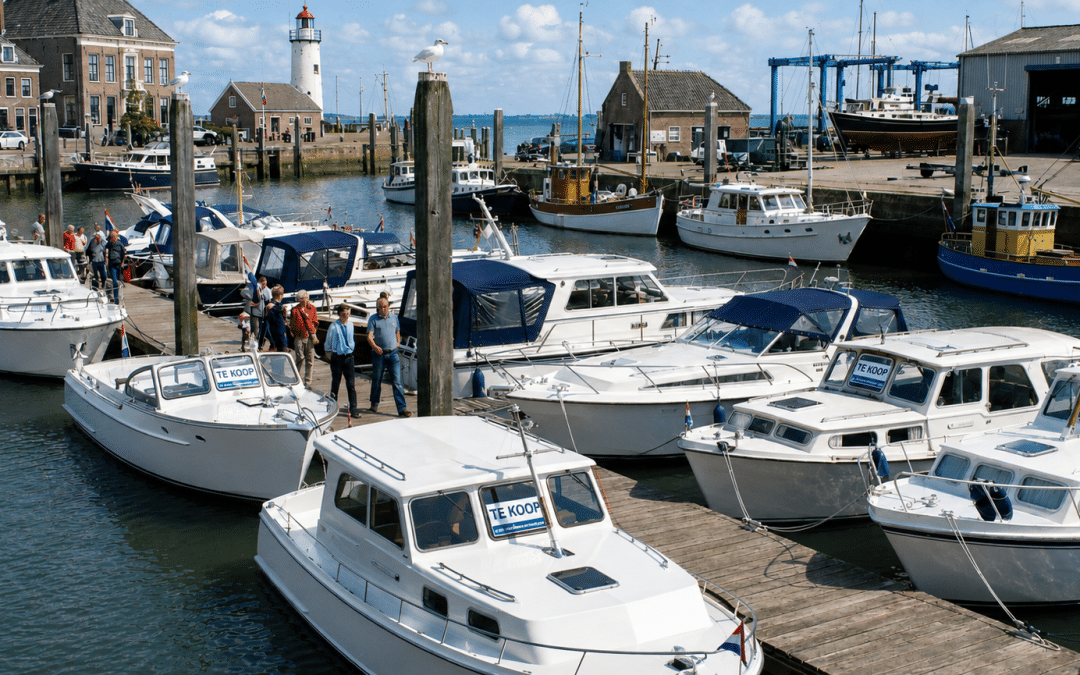




The love for water is instilled in many Dutch people from an early age. Children learn to swim well at a young age, and on a warm summer day, a trip to the beach is very popular. Fortunately, we have a lot of water in the Netherlands. Not only for swimming, but also for boating, paddleboarding, sailing, and much more.
For many people, the love for boating starts recreationally. They rent a boat with family or friends to experience what it's like. Relaxing on the shimmering water with the sun on their face and a cool breeze in the background. Enjoying the reed beds, the lively hustle and bustle on the water, and the beauty of nature along the winding rivers. Most people find this beautiful and enjoy it to the fullest. It is not uncommon for the idea of owning a boat to arise here. But owning a boat, of course, also brings responsibility. What is allowed and what is not? When do you need a boating licence, and what is the etiquette on the water?
Boating, what is always allowed?
You do not need a boating licence on a boat that cannot go faster than 20 km per hour and is not longer than 15 meters. This guideline is strictly enforced. If you do sail faster, or if the boat is longer, you must be able to show your boating licence. Incidentally, a boating licence is a very good idea if you plan to regularly go out on the water with your own boat. Especially the usual etiquette on the water is important. If you are not aware of it, a boating mistake is quickly made.
When do you actually need a boating licence?
As we explained above, you need a boating licence if your boat sails faster than 20 kilometers per hour and is longer than 15 meters. You also need a boating licence if you use your boat commercially for the transport of goods and/or people.
Small Boating licence I
This boating licence is very suitable for people who prefer recreational activities and want to enjoy the water with their own boat. With this small Boating licence I, you are allowed to sail a boat on most inland waterways, small lakes, rivers, and the Gouwzee. This boating licence is simultaneously an International Certificate for Operators of Pleasure Craft (ICC) for inland waters. Its validity is unlimited, provided there are no medical objections.
To apply for a Small Boating licence I, you need to be at least 18 years old and have successfully passed the KVB1 theory exam. During the KVB1 exam, your knowledge will be tested, and you must be able to demonstrate familiarity with the legal provisions for sailing on canals, lakes, and rivers. You will also gain knowledge about handling special situations and various conditions on the water.
Small Boating licence II
If you possess this boating licence, you are also allowed to sail on larger open waters at more than 20 km per hour and be larger than 15 meters. This includes the Markermeer, IJsselmeer, Eems, and the Ooster- and Westerschelde. This boating licence, which is a nice addition to Small Boating licence I, is also an international certificate and has an unlimited validity period.
During the theory exam, you must be able to demonstrate that you have knowledge of tides and currents and that you are able to read a map. It is important that you can plan a boat trip, taking into account the wind and the course you see on your compass. Now this seems very complicated, but if you already possess Small Boating licence I, the step to Small Boating licence II is not that big anymore.
Etiquette, what everyone on the water should know
Etiquette on the water is very important and is also the best basis for a lot of boating pleasure. First, it's good to know that it's very common to greet each other on the water. It might feel a bit awkward, but it's really part of it. So wave enthusiastically, let the other person know you've seen them, and be considerate of each other.
Another important unwritten rule is to help each other when needed. So never look away, but always offer a helping hand if you see that a boat or skipper could use some help. Always try to avoid a collision, give way to commercial shipping and let faster boats go first.