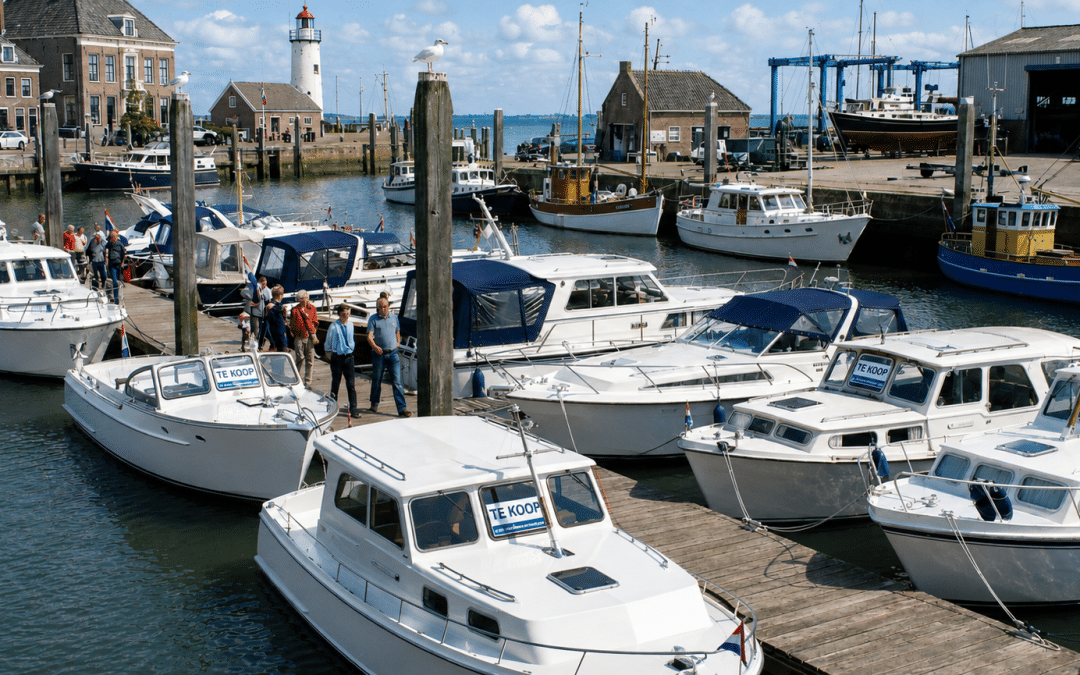





The first spring sun breaks through the clouds and the urge to go boating arises. It's time to go sailing again! Before you go out on the water, it's important to prepare your boat for summer. Why is this important and what should you absolutely do before mooring?
Why prepare your boat for summer?
When you prepare your boat for summer, you check if your boat needs maintenance or repairs. It's also time for a thorough cleaning. You may have already checked many things when you prepared your boat for winter. Nevertheless, it's good to follow a checklist again now, especially if your boat was in the water during winter. This reduces the chance that you will, for example, be stranded with a broken engine halfway through your boat trip.
What does preparing your boat for summer entail?
Roughly, we can divide preparing your boat for summer into five categories: safety equipment, the engine and battery, the gas installation, the underwater hull, and the mooring lines.
Safety equipment includes items such as the fire extinguisher, lifebuoy, life jackets, distress signals, first aid kit, and any dinghy. In case of emergency, you want to be well prepared. If the CO2 cartridges of your life jackets need to be replaced or the expiry date of your distress signals has passed, now is the time to do something about it.
It goes without saying that the engine and battery must do their job well. You don't want to be stranded halfway across the lake or in the middle of the sea. The entire gas installation on your boat must also be in top condition. The underwater hull must be clean and rust-free. Damage must be dealt with immediately. A leak is the last thing you want. Finally, all mooring lines and other ropes must be in good condition. Frayed ends should be sealed, and dirty lines are best washed.
The top five summer readiness tips
As you can see, there are many things that need to be checked and maintained – too many to discuss in detail here one by one. However, with these top five summer readiness tips, you can tick off the most important items from your list!
Engine maintenance
Always check your engine, even if you gave it a major service when you prepared the boat for winter. After all, the engine has been idle for a while. It is always necessary to change the engine oil and replace the filters. Replace the V-belts if they are worn and tension them. Also, always make sure you have spare V-belts on board. Finally, check the battery and the coolant of your engine.
Navigation
Depending on where you sail and where you want to go, navigation tools are an absolute necessity. Therefore, check if your nautical charts are still up-to-date. Check if your compass, your depth sounder and your log are in order and if there is a valid regulation on your boat.
Check and replace anodes
The anodes must be in good condition to protect your boat against galvanic corrosion. The anodes prevent the metal parts of your boat from receiving electrical charges. Always check the anodes, because they can age considerably within a year.
Antifouling
Check if the underwater hull needs a new layer of antifouling. This special paint layer prevents mussels and algae from clinging to your boat. The cleaner the underwater hull, the more streamlined your boat and the less fuel you consume. If your boat is in salt water, the underwater hull needs a fresh coat of paint more often than if the boat is moored in fresh water. Also check whether the propeller shaft needs to be sanded and painted to prevent or remove fouling.
Big clean-up
All technical maintenance is important, but don't forget to wipe down the interior of your boat. Air out the boat thoroughly to get rid of any musty smells and clean all corners of the interior, as well as the deck. This way you will enjoy your boat much more.