



Traffic rules apply not only on the road, but also on the water. And that makes sense, because that's how we keep it safe and fun for everyone. To prevent dangerous situations and high fines, it is very important that you know the general rules. In this article, we tell you what you need to know about boating rules and right-of-way rules on the water.
General traffic rules
Rules apply for safe boating. As the driver and skipper of a fast motorboat, personal watercraft, or jet ski, you must be at least 18 years old. On the water, a maximum speed of 20 km/h applies, unless otherwise indicated. On the waterway, keep to the starboard side (right side) as much as possible. Continue on the same course and look around regularly. Only take a berth in locations where this is permitted. These locations are indicated by signs.
Furthermore, you must have a boating licence as a skipper of a fast boat (when the boat can travel faster than 20 km/h) or a long boat, longer than 15 meters (this boat does not need to be able to travel fast). You must also use a kill cord (or similar device), which ensures that the engine automatically shuts off if the driver suddenly falls overboard. And of course, as a skipper, you are not allowed to drink alcohol. The legal limit on the water is 0.5 per mille.
Signs on the water
On the water, you may encounter various traffic signs. The most important traffic sign on the water is the prohibition sign. This is a square sign with a red border and a red diagonal line from top left to bottom right. For example, do you see a large “P” with a red diagonal line through it? Then that means you are not allowed to moor there. With the same sign in blue, you are allowed to anchor or moor. Do you see a square sign with three horizontal lines above each other, of which the top and bottom lines are red? Then entry, exit or passage is prohibited. This sign is usually found near a bridge.
Right-of-way rules on the water
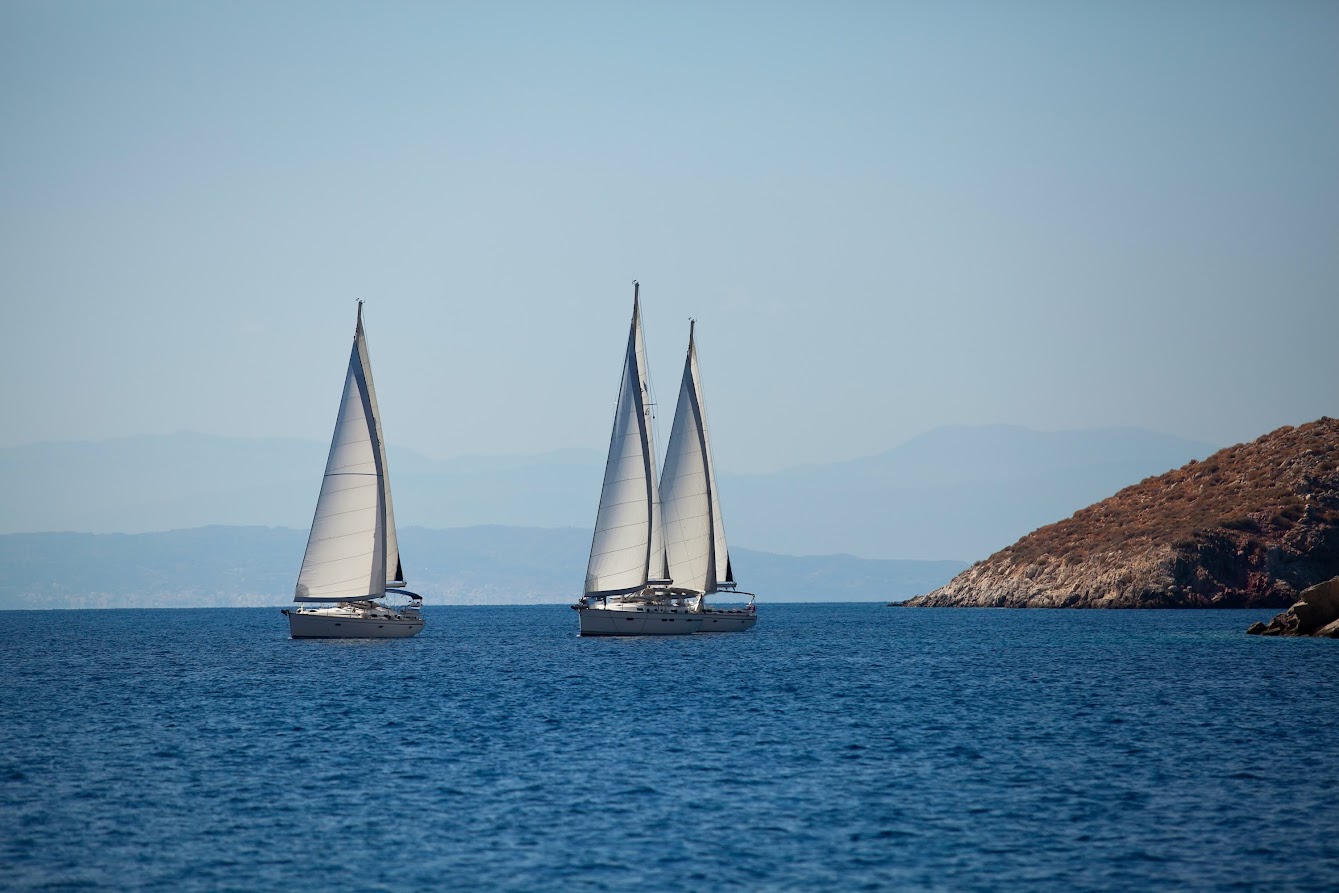
On the water, starboard goes before port. So, right of way applies. If you are sailing on the right side of the main channel in a fairway, you have right of way over boats and ships that want to enter the main channel. This does not apply if the other vessel is also coming from a buoyed waterway. In that case, the larger vessel takes precedence over the smaller vessel. According to the right-of-way rules on the water, a motorboat must always give way to a vessel propelled by muscle power. This includes a sailing yacht, rowing boat, pedal boat, or a stand-up paddleboard. Based on the principle of good seamanship, you should always try to avoid a collision. This means you must give way if you are not given right of way, even if you are entitled to it.
What do you do with cargo ships?
A large part of the waterway network is also used by commercial shipping. Small vessels must always give way to large vessels (larger than 20m), passenger ships, ferries and tugboats. These ships usually sail very fast and cannot simply slow down. Fishing boats and tugboats also fall under large vessels and therefore also get priority (when they are working). This also applies if these ships are shorter than 20 meters.
Technical check of the boat
Are you going on the water? Make sure the boat is technically in order. Make sure the batteries are full and there is enough fuel. It is also advisable to check the cooling water and engine oil level. When you are moored again, make sure you leave the boat properly and safely. This means turning off the engine, cleaning up any mess and waste, and neatly storing other items. Don't forget the cover either. A well-sealed boat not only prevents theft but also water damage in the boat.